It is estimated that the demand for tech talent will keep increasing, and this could result in an estimated 85 million global talent shortage by the year 2030. Therefore, companies need to rethink their approach to hiring and retention.
Reasons Behind the Tech Talent Shortage
It is worth trying to first understand what is causing the tech talent shortage. A few of the reasons that have led to the shortage include:
Advances in technology – technology is advancing at high speed, requiring workers with skills to match the new technology. Unfortunately, the tech education system can’t keep up with the speed, hence a shortage of people with the required skills.
High demand for tech talent – There has been an increase in the demand for tech workers in recent years as more businesses and industries turn to technology for daily operations. New technology creates new roles, such as data professionals, data security specialists, and software engineers, among others that are highly competitive.
Challenges in training and development – some companies might not have the resources and time to invest in employee development.
Business Challenges of IT Talent Shortage
Businesses are feeling the effect of the tech talent shortage, especially when it comes to digital transformation. Emerging technologies such as robotic process automation (RPA), artificial intelligence, blockchain, and augmented reality that promise to keep a business ahead of its competition require skilled workers.
Hiring new talent or reskilling employees also comes at a cost, and companies struggle to fill positions. On the other hand, failing to have skilled employees results in unrealized annual revenues.
As a result, businesses of all sizes find themselves failing to develop projects on time and hence fail to meet deadlines. In other cases, the existing employees end up overburdened with too much work, and this may lead to them quitting. Eventually, a business experiences slow innovation and slow growth.
How to Handle the Tech Talent Shortage
A few strategies to help address this issue include:
Investing in employee development and training Providing ongoing training and development opportunities for current employees can help them acquire new skills and knowledge. This will not only make them more valuable to your organization, but also less likely to leave.
Attract top talent through a strong employer brand Building a strong employer brand can help in attracting top talent to your organization. This can involve highlighting your company’s culture, values and mission, as well as offering competitive compensation and benefits packages. A good reputation will also help attract new talent.
Partnering with educational institutions A company may also partner with local colleges and universities to gain access to a pool of talented students who are looking for internships or entry-level positions. Additionally, setting up mentorship or internship programs helps build a pipeline of talent for your organization.
Increase recruitment efforts Sometimes it might be difficult to find the right talent, which makes it necessary to increase recruitment efforts. This could involve working with recruitment agencies, posting job openings on job boards and social media platforms, and attending job fairs and industry events.
Consider hiring remote workers Even with all efforts in place, it may still be difficult to find the right talent in a business location. Today, technology has enabled people to work remotely. This offers access to a larger pool of candidates and also can help attract top talent from other parts of the country or even the world. It is also possible to work with freelancers or contractors to fill specific skills gaps on a project-by-project basis.
Enhance the recruitment process An inefficient recruitment process will cost the company good talent. Therefore, any poor communication or delayed communication will affect talent acquisition. A company might need to streamline its recruitment process.
Final Thoughts
The global tech talent shortage is already negatively affecting businesses. Since the shortage is expected to rise, business leaders need to decide on the best way forward so they are not left behind in digital transformation. A good decision should fit business goals whether choosing to hire internal talent, remote workers, or outsource technology needs.
Handling Talent Shortages in Tech Departments
January 1, 2023 · Blog, What's New in Technology
⏱ 4 min read
Technology advancement has brought about great digital transformation. Unfortunately, this has come with a global tech talent shortage. IT executives highlight the shortage as a huge barrier to the adoption of emerging technologies, as reported by this Gartner study.
It is estimated that the demand for tech talent will keep increasing, and this could result in an estimated 85 million global talent shortage by the year 2030. Therefore, companies need to rethink their approach to hiring and retention.
Reasons Behind the Tech Talent Shortage
It is worth trying to first understand what is causing the tech talent shortage. A few of the reasons that have led to the shortage include:
Advances in technology – technology is advancing at high speed, requiring workers with skills to match the new technology. Unfortunately, the tech education system can’t keep up with the speed, hence a shortage of people with the required skills.
High demand for tech talent – There has been an increase in the demand for tech workers in recent years as more businesses and industries turn to technology for daily operations. New technology creates new roles, such as data professionals, data security specialists, and software engineers, among others that are highly competitive.
Challenges in training and development – some companies might not have the resources and time to invest in employee development.
Business Challenges of IT Talent Shortage
Businesses are feeling the effect of the tech talent shortage, especially when it comes to digital transformation. Emerging technologies such as robotic process automation (RPA), artificial intelligence, blockchain, and augmented reality that promise to keep a business ahead of its competition require skilled workers.
Hiring new talent or reskilling employees also comes at a cost, and companies struggle to fill positions. On the other hand, failing to have skilled employees results in unrealized annual revenues.
As a result, businesses of all sizes find themselves failing to develop projects on time and hence fail to meet deadlines. In other cases, the existing employees end up overburdened with too much work, and this may lead to them quitting. Eventually, a business experiences slow innovation and slow growth.
How to Handle the Tech Talent Shortage
A few strategies to help address this issue include:
Investing in employee development and training Providing ongoing training and development opportunities for current employees can help them acquire new skills and knowledge. This will not only make them more valuable to your organization, but also less likely to leave.
Attract top talent through a strong employer brand Building a strong employer brand can help in attracting top talent to your organization. This can involve highlighting your company’s culture, values and mission, as well as offering competitive compensation and benefits packages. A good reputation will also help attract new talent.
Partnering with educational institutions A company may also partner with local colleges and universities to gain access to a pool of talented students who are looking for internships or entry-level positions. Additionally, setting up mentorship or internship programs helps build a pipeline of talent for your organization.
Increase recruitment efforts Sometimes it might be difficult to find the right talent, which makes it necessary to increase recruitment efforts. This could involve working with recruitment agencies, posting job openings on job boards and social media platforms, and attending job fairs and industry events.
Consider hiring remote workers Even with all efforts in place, it may still be difficult to find the right talent in a business location. Today, technology has enabled people to work remotely. This offers access to a larger pool of candidates and also can help attract top talent from other parts of the country or even the world. It is also possible to work with freelancers or contractors to fill specific skills gaps on a project-by-project basis.
Enhance the recruitment process An inefficient recruitment process will cost the company good talent. Therefore, any poor communication or delayed communication will affect talent acquisition. A company might need to streamline its recruitment process.
Final Thoughts
The global tech talent shortage is already negatively affecting businesses. Since the shortage is expected to rise, business leaders need to decide on the best way forward so they are not left behind in digital transformation. A good decision should fit business goals whether choosing to hire internal talent, remote workers, or outsource technology needs.
Disclaimer
These articles are intended to provide general resources for the tax and accounting needs of small businesses and individuals. Service2Client LLC is the author, but is not engaged in rendering specific legal, accounting, financial or professional advice. Service2Client LLC makes no representation that the recommendations of Service2Client LLC will achieve any result. The NSAD has not reviewed any of the Service2Client LLC content. Readers are encouraged to contact a professional regarding the topics in these articles. The images linked to these articles are protected by copyright and should not be copied for any reason.
These articles are intended to provide general resources for the tax and accounting needs of small businesses and individuals. Service2Client LLC is the author, but is not engaged in rendering specific legal, accounting, financial or professional advice. Service2Client LLC makes no representation that the recommendations of Service2Client LLC will achieve any result. The NSAD has not reviewed any of the Service2Client LLC content. Readers are encouraged to contact a professional regarding the topics in these articles. The images linked to these articles are protected by copyright and should not be copied for any reason.
Unlike classical computing, whose information is encoded by bits, in quantum computing a qubit is the basic unit of quantum information. Qubit allows all combinations of information to exist simultaneously so that quantum computers can solve problems exponentially faster and with less energy consumption than classical computers.
Advanced development in this technology has also seen the introduction of quantum-computing cloud infrastructure through Quantum as a Service (QaaS). QaaS provides access to quantum computing platforms over the internet to customers. Major technology companies, such as Amazon, Alibaba, IBM, Google, and Microsoft, have already launched commercial cloud services for quantum computing.
With the continued increase in the quantum computing ecosystem and emerging business use cases, business leaders must stay aware and prepare to adopt the new technology.
Business Use Cases for Quantum Computing
1. Quick Data Analytics
Today more than ever, businesses are faced with big data and a large quantity of information requiring analysis and storage. Since classical computers are built to solve one task at a time, it takes longer to solve these complex problems.
However, quantum technology has the potential to turn complex computations into simple calculations that are solved in less time.
2. Optimize Investment Strategies
Optimization is all about finding the most ideal solution in a situation. When many options are available, it takes a classical computer a long time to find a solution. Therefore, classical computers use shortcuts, and the final solution is partly optimal. But, with quantum computing, there will be better optimization.
3. Better Forecast and Prediction
Businesses rely on forecasts and predictions generated after analyzing complex and large data sets. Quantum computing is built to process huge amounts of data quickly and more accurately. As a result, better forecasts and predictions will enable better decision-making.
4. Solve Problems With Financial Services
There are various computationally intensive jobs in finance that could be facilitated by quantum computing, such as credit-risk management, financial crime reduction, and trading strategy optimization. These tasks will greatly benefit from quantum algorithms that increase the speed of financial calculations.
5. Improve Data Security
Quantum computers are built to break encryptions that ordinary computers cannot. This might become a problem if hackers were to acquire encrypted data and store it until large-scale quantum computers are operational. To handle this problem, postquantum cryptography, a type of cyber security that can be used by conventional computers, is currently being developed. Therefore, a switch to quantum-resistant cryptography will prevent the possibility of data being exposed. At the same time, it will ensure better protection of digital assets.
Final Thoughts
Quantum computers will not replace classical computers; however, the two will form a hybrid solution whereby each task will be assigned to the most suitable machine – either quantum or classical.
Achieving the aforementioned benefits will require businesses to have teams of experts who are knowledgeable about the implications of quantum computing and who can recognize the company’s potential future needs, opportunities, and vulnerabilities.
With signs of commercial quantum computing becoming a reality, it’s not too early for business leaders to consider how it will encourage digital investment, reshape industries and ignite innovation. Therefore, having a thorough understanding of quantum applications is essential for positioning a business to gain a competitive edge.
Quantum Computing Uses That Solve Business Problems
November 1, 2022 · Blog, What's New in Technology
⏱ 4 min read
Early technology adopters are more likely to gain better business results, including higher revenue growth and market position. With businesses facing complex problems every day, it is no doubt that they are always watching out for the next big tech that offers a better solution.
Although still in its infancy stages, quantum computing is a technology whose commercial use will disrupt the business environment.
What is Quantum Computing?
Quantum computing is a technology that focuses on manipulating and controlling different laws of physics. This non-classical technology uses quantum mechanical concepts like superposition and quantum entanglement.
The idea of quantum computing is not new and has come a long way. The first algorithm of large integer factorization for quantum computing was introduced in 1994. This algorithm intended to reduce the time it would take classical computers to find the prime factors of large numbers. It’s worth noting that the majority of the current infrastructure for encryption and information security is built on prime factorization.
Since the first algorithm was developed, more technological advances have been reported, and the field is continuously receiving funding. According to the McKinsey & Company Quantum Technology Monitor, funding from private and public sectors for this new technology is skyrocketing worldwide.
How it Works
Unlike classical computing, whose information is encoded by bits, in quantum computing a qubit is the basic unit of quantum information. Qubit allows all combinations of information to exist simultaneously so that quantum computers can solve problems exponentially faster and with less energy consumption than classical computers.
Advanced development in this technology has also seen the introduction of quantum-computing cloud infrastructure through Quantum as a Service (QaaS). QaaS provides access to quantum computing platforms over the internet to customers. Major technology companies, such as Amazon, Alibaba, IBM, Google, and Microsoft, have already launched commercial cloud services for quantum computing.
With the continued increase in the quantum computing ecosystem and emerging business use cases, business leaders must stay aware and prepare to adopt the new technology.
Business Use Cases for Quantum Computing
1. Quick Data Analytics
Today more than ever, businesses are faced with big data and a large quantity of information requiring analysis and storage. Since classical computers are built to solve one task at a time, it takes longer to solve these complex problems.
However, quantum technology has the potential to turn complex computations into simple calculations that are solved in less time.
2. Optimize Investment Strategies
Optimization is all about finding the most ideal solution in a situation. When many options are available, it takes a classical computer a long time to find a solution. Therefore, classical computers use shortcuts, and the final solution is partly optimal. But, with quantum computing, there will be better optimization.
3. Better Forecast and Prediction
Businesses rely on forecasts and predictions generated after analyzing complex and large data sets. Quantum computing is built to process huge amounts of data quickly and more accurately. As a result, better forecasts and predictions will enable better decision-making.
4. Solve Problems With Financial Services
There are various computationally intensive jobs in finance that could be facilitated by quantum computing, such as credit-risk management, financial crime reduction, and trading strategy optimization. These tasks will greatly benefit from quantum algorithms that increase the speed of financial calculations.
5. Improve Data Security
Quantum computers are built to break encryptions that ordinary computers cannot. This might become a problem if hackers were to acquire encrypted data and store it until large-scale quantum computers are operational. To handle this problem, postquantum cryptography, a type of cyber security that can be used by conventional computers, is currently being developed. Therefore, a switch to quantum-resistant cryptography will prevent the possibility of data being exposed. At the same time, it will ensure better protection of digital assets.
Final Thoughts
Quantum computers will not replace classical computers; however, the two will form a hybrid solution whereby each task will be assigned to the most suitable machine – either quantum or classical.
Achieving the aforementioned benefits will require businesses to have teams of experts who are knowledgeable about the implications of quantum computing and who can recognize the company’s potential future needs, opportunities, and vulnerabilities.
With signs of commercial quantum computing becoming a reality, it’s not too early for business leaders to consider how it will encourage digital investment, reshape industries and ignite innovation. Therefore, having a thorough understanding of quantum applications is essential for positioning a business to gain a competitive edge.
Disclaimer
These articles are intended to provide general resources for the tax and accounting needs of small businesses and individuals. Service2Client LLC is the author, but is not engaged in rendering specific legal, accounting, financial or professional advice. Service2Client LLC makes no representation that the recommendations of Service2Client LLC will achieve any result. The NSAD has not reviewed any of the Service2Client LLC content. Readers are encouraged to contact a professional regarding the topics in these articles. The images linked to these articles are protected by copyright and should not be copied for any reason.
Cybercriminals are able to execute social engineering attacks by accessing readily available information online. They can research a business, employees and executives. The criminal will even use an actual event picked from social media – for instance, a financial director who is just returned to work from a holiday – to sound more legitimate.
This emerging security threat is also made possible by the development of video editing software that can swap faces and alter facial expressions. Such developments have enabled deepfakes to fool biometric checks (like facial recognition) to verify user identities.
The deepfake cybersecurity threat has become such a concern that the Federal Bureau of Investigation (FBI) has issued a Private Industry Notification (PIN) cautioning companies of the possible use of fake content in a newly defined cyberattack vector referred to as Business Identity Compromise (BIC).
How to be Prepared and Protect Against Deepfakes
Deepfake videos and images can be recognized by checking for unnatural body shape, lack of blinking in videos, unnatural facial expressions, abnormal skin color, bad lip-syncing, odd lighting, awkward head and body positioning, etc. However, cybercriminals keep evolving and creating more convincing deepfakes.
Other measures introduced to combat deepfakes include creating solutions that detect deepfakes. There also was an introduction of deepfake legislation in the National Defense Authorization Act (NDAA) in December 2019.
Unfortunately, this has not been enough, and enterprises have the task of helping reduce the impact of these attacks. The following measures can help:
Use anti-fake technologies Businesses should explore automated technologies that help identify deepfake attacks. They should also consider watermarking images and videos.
Enforce robust security protocols Implement security protocols to help avoid deepfakes, such as automatic checks for any procedure involving payments. For instance, putting systems that allow verification through other mediums.
Develop new security standards As security threats keep evolving, so should security standards within a company. For instance, introduce new security standards involving phone and video calls.
Training and awareness Enterprises should enforce regular training and raise awareness among employees, management, and shareholders on the dangers of deepfakes to businesses. When all involved parties are trained to identify deepfake social engineering efforts, this will help reduce the chances of falling victim.
Keep user data private Deepfake attackers use the information found in public domains such as social media. Although not a failsafe procedure, company profiles can be made private. Users also should avoid adding or connecting with strangers they don’t know and posting too much personal information online.
Disinformation response policy Some deepfake incidents are out of control for an enterprise, such as fake videos purporting to be from top management. However, establishing a disinformation response plan will help in cases of a reputation crisis. This should include monitoring and curating all multimedia output – which will help present original content to the public as authentic content.
Conclusion
Deepfake is an emerging cybersecurity concern that requires enterprises to be aware of its potential threats and stay prepared. Although it might be possible to identify a poorly generated deepfake with the naked eye, the technology continues to advance. In response, countermeasures must keep pace.
Increase In Deepfake Attacks and How Enterprises Can Prepare
October 1, 2022 · Blog, What's New in Technology
⏱ 4 min read
Deepfake technology utilizes machine learning and artificial intelligence (AI) to manipulate or create synthetic audio, video and images that appear authentic. Deepfakes are commonly featured in entertainment and politics to spread false information and propaganda. For instance, deepfake has been used to show a celebrity or leader saying something that they didn’t, and this creates fake news.
Unfortunately, in deepfakes, cybercriminals have found a new tool for cyberattacks. Cybercriminals are now using deepfakes to pose a variety of enterprise risks.
How Cybercriminals Are Using Deepfakes
Deepfake technology is now used to create scams, hoaxes and false claims that undermine and destabilize organizations. For instance, a manipulated video might show a senior executive associated with fake news, such as admitting to a financial crime or spreading misinformation about a company’s products. Such corporate sabotage costs a lot of time and money to disprove and can impact a business’s reputation.
Another way businesses can be negatively impacted is through social engineering attacks such as phishing, which relies on impersonation to compromise an email. Similarly, social engineering using deepfakes can feature voice or video impersonations. A good example of such an impersonation was reported in The Wall Street Journal, in which fraudsters used AI to mimic a CEO’s voice. This incident happened in March 2019, when criminals impersonated a chief executive’s voice to direct a payment of $243,000.
Cybercriminals are able to execute social engineering attacks by accessing readily available information online. They can research a business, employees and executives. The criminal will even use an actual event picked from social media – for instance, a financial director who is just returned to work from a holiday – to sound more legitimate.
This emerging security threat is also made possible by the development of video editing software that can swap faces and alter facial expressions. Such developments have enabled deepfakes to fool biometric checks (like facial recognition) to verify user identities.
The deepfake cybersecurity threat has become such a concern that the Federal Bureau of Investigation (FBI) has issued a Private Industry Notification (PIN) cautioning companies of the possible use of fake content in a newly defined cyberattack vector referred to as Business Identity Compromise (BIC).
How to be Prepared and Protect Against Deepfakes
Deepfake videos and images can be recognized by checking for unnatural body shape, lack of blinking in videos, unnatural facial expressions, abnormal skin color, bad lip-syncing, odd lighting, awkward head and body positioning, etc. However, cybercriminals keep evolving and creating more convincing deepfakes.
Other measures introduced to combat deepfakes include creating solutions that detect deepfakes. There also was an introduction of deepfake legislation in the National Defense Authorization Act (NDAA) in December 2019.
Unfortunately, this has not been enough, and enterprises have the task of helping reduce the impact of these attacks. The following measures can help:
Use anti-fake technologies Businesses should explore automated technologies that help identify deepfake attacks. They should also consider watermarking images and videos.
Enforce robust security protocols Implement security protocols to help avoid deepfakes, such as automatic checks for any procedure involving payments. For instance, putting systems that allow verification through other mediums.
Develop new security standards As security threats keep evolving, so should security standards within a company. For instance, introduce new security standards involving phone and video calls.
Training and awareness Enterprises should enforce regular training and raise awareness among employees, management, and shareholders on the dangers of deepfakes to businesses. When all involved parties are trained to identify deepfake social engineering efforts, this will help reduce the chances of falling victim.
Keep user data private Deepfake attackers use the information found in public domains such as social media. Although not a failsafe procedure, company profiles can be made private. Users also should avoid adding or connecting with strangers they don’t know and posting too much personal information online.
Disinformation response policy Some deepfake incidents are out of control for an enterprise, such as fake videos purporting to be from top management. However, establishing a disinformation response plan will help in cases of a reputation crisis. This should include monitoring and curating all multimedia output – which will help present original content to the public as authentic content.
Conclusion
Deepfake is an emerging cybersecurity concern that requires enterprises to be aware of its potential threats and stay prepared. Although it might be possible to identify a poorly generated deepfake with the naked eye, the technology continues to advance. In response, countermeasures must keep pace.
Disclaimer
These articles are intended to provide general resources for the tax and accounting needs of small businesses and individuals. Service2Client LLC is the author, but is not engaged in rendering specific legal, accounting, financial or professional advice. Service2Client LLC makes no representation that the recommendations of Service2Client LLC will achieve any result. The NSAD has not reviewed any of the Service2Client LLC content. Readers are encouraged to contact a professional regarding the topics in these articles. The images linked to these articles are protected by copyright and should not be copied for any reason.
Since this information is readily available on a user’s web browser, cybercriminals can use a malicious extension to collect the data for their gain. At the same time, the data collected is sold without user consent or knowledge and used by third-party data brokers to send users tailor-made ads.
Although not all browser extensions are a security risk, some might be built to impersonate legitimate extensions, especially those from third-party resources. In other cases, legitimate extensions have been compromised or bought by a developer who uses them for malicious purposes.
Some browser add-ons are built to download malware onto your device, redirect search traffic to malicious websites or download ad ware and Trojan horse viruses.
The extensions can automatically update without requiring any action from a user. This means that if a legitimate extension is compromised, it can be used to install malware without user knowledge. Even secure extensions are prone to attacks or can be compromised, enabling attackers to gain access to data stored by browsers.
Additionally, malicious extensions can be built to bypass fraud detection by official Web stores. For instance, in 2020, Google removed over 500 extensions from its web store that violated policies, with some already having infected users and stolen their data. This followed the discovery of some malicious extensions that users had already downloaded.
A recent report released by Kaspersky, a cybersecurity firm, shows just how dangerous malicious add-ons are. After the firm analyzed data from January 2020 to June 2022, it discovered that over this time frame, 4.3 million users were attacked by adware hiding in browser extensions. This put adware as the highest representative of browser extension risks, with malware coming second. The report also indicates that Kaspersky products prevented more than 6 million users from downloading adware, malware or riskware disguised as browser extensions.
Such figures from just one cybersecurity firm are worrying, considering the study focused only on users that use their security solutions. This creates a need for users to be more vigilant when using browser extensions.
How to Make Sure Browser Extensions Are Safe
There are various ways to help reduce the risks posed by browser extensions:
Ensure the extension is from an official web store. Since these extensions can also be compromised, it is best to find out more information about the developer.
Check reviews as they help to know what other users think of the extension and if there have been any complaints. However, users should be cautious of identical comments or too many 5-star reviews, as these could be fake.
Check whether the extension is updated regularly. An extension last updated many years ago might not be reliable.
Review extension permissions for each extension.
Check that you are not installing clones of the original extension. For instance, if you search for an extension, you can find other similar ones that look legit.
Uninstall browser extensions that you don’t recognize or those you no longer need.
Use browsers that have the features you want.
Install reliable antivirus software that will help spot malicious activities or applications.
Conclusion
Browser extensions play an important role in the user browsing experience. Although not all extensions are dangerous, users must conduct due diligence to ensure they install legitimate extensions.
Risk of Browser Extensions and How to Stay Safe
September 1, 2022 · Blog, What's New in Technology
⏱ 4 min read
Web browsers such as Google Chrome, Firefox, Safari and Edge, among others, play an essential role in enabling access to websites on the internet. Most browsers allow users to install extensions, also referred to as add-ons or plug-ins. These extensions are applications or small software modules that add functionality and other useful features to a browser.
By means of the extensions, users can carry out various tasks such as password management, cookie management, ad blocking, interface modification, productivity tracking, grammar and spell-checking, etc.
However, although the extensions offer different useful functionalities, cybercriminals have taken advantage of them, creating a security risk to users and their data.
The Need to Beware of Browser Extensions
Browsers enable websites to collect information such as viewing history, adding cookies, etc. Also, when installing the extensions, some require to be allowed various permissions, like the ability to read or change data. For instance, according to a recent study by Talon, a digital security company, most Chrome Web Store extensions (62.43 percent of extensions) require dangerous permissions, including permission to read or change user data and activity. This means that an extension can see the sites visited, keystrokes, login credentials and private data, such as payment card details.
Since this information is readily available on a user’s web browser, cybercriminals can use a malicious extension to collect the data for their gain. At the same time, the data collected is sold without user consent or knowledge and used by third-party data brokers to send users tailor-made ads.
Although not all browser extensions are a security risk, some might be built to impersonate legitimate extensions, especially those from third-party resources. In other cases, legitimate extensions have been compromised or bought by a developer who uses them for malicious purposes.
Some browser add-ons are built to download malware onto your device, redirect search traffic to malicious websites or download ad ware and Trojan horse viruses.
The extensions can automatically update without requiring any action from a user. This means that if a legitimate extension is compromised, it can be used to install malware without user knowledge. Even secure extensions are prone to attacks or can be compromised, enabling attackers to gain access to data stored by browsers.
Additionally, malicious extensions can be built to bypass fraud detection by official Web stores. For instance, in 2020, Google removed over 500 extensions from its web store that violated policies, with some already having infected users and stolen their data. This followed the discovery of some malicious extensions that users had already downloaded.
A recent report released by Kaspersky, a cybersecurity firm, shows just how dangerous malicious add-ons are. After the firm analyzed data from January 2020 to June 2022, it discovered that over this time frame, 4.3 million users were attacked by adware hiding in browser extensions. This put adware as the highest representative of browser extension risks, with malware coming second. The report also indicates that Kaspersky products prevented more than 6 million users from downloading adware, malware or riskware disguised as browser extensions.
Such figures from just one cybersecurity firm are worrying, considering the study focused only on users that use their security solutions. This creates a need for users to be more vigilant when using browser extensions.
How to Make Sure Browser Extensions Are Safe
There are various ways to help reduce the risks posed by browser extensions:
Ensure the extension is from an official web store. Since these extensions can also be compromised, it is best to find out more information about the developer.
Check reviews as they help to know what other users think of the extension and if there have been any complaints. However, users should be cautious of identical comments or too many 5-star reviews, as these could be fake.
Check whether the extension is updated regularly. An extension last updated many years ago might not be reliable.
Review extension permissions for each extension.
Check that you are not installing clones of the original extension. For instance, if you search for an extension, you can find other similar ones that look legit.
Uninstall browser extensions that you don’t recognize or those you no longer need.
Use browsers that have the features you want.
Install reliable antivirus software that will help spot malicious activities or applications.
Conclusion
Browser extensions play an important role in the user browsing experience. Although not all extensions are dangerous, users must conduct due diligence to ensure they install legitimate extensions.
Disclaimer
These articles are intended to provide general resources for the tax and accounting needs of small businesses and individuals. Service2Client LLC is the author, but is not engaged in rendering specific legal, accounting, financial or professional advice. Service2Client LLC makes no representation that the recommendations of Service2Client LLC will achieve any result. The NSAD has not reviewed any of the Service2Client LLC content. Readers are encouraged to contact a professional regarding the topics in these articles. The images linked to these articles are protected by copyright and should not be copied for any reason.
With such news making the headlines, businesses may wonder how they can benefit from NFTs.
How Can a Business Benefit from NFTs?
Businesses still hesitant about adopting new technologies should start considering creating NFTs that align with their brand image. Below are some ways in which a business can benefit:
1. Brand Visibility
Aside from digital marketing, NFTs provide another way businesses and corporations can drive attention to their brand. For instance, by creating a digital version of your products, you expose it to NFT enthusiasts, some of who might not be aware of your products. NFTs also can be incorporated as part of your brand storytelling, creating unique experiences for your customers, consequently increasing consumer engagements.
2. Authenticity
Many businesses undergo massive losses of revenue due to counterfeit products. With NFTs, businesses can ascertain the authenticity of their products and services. A digital certificate is issued with every transaction and a record is kept on the blockchain. A customer can check the authenticity since the blockchain can be traced to the original seller.
3. Additional Revenue Stream
Businesses can use NFTs as an additional source of income by selling digital forms of their products or services. One way to do this is by creating an early access opportunity before the official product launches, creating a buzz and ensuring the NFT value will rise.
4. Customer Loyalty Program
The versatile nature of NFTs makes them ideal for use in loyalty programs. The tokens can be used as medals for loyal clients or as membership tokens.
5. Prevent Ticket Scams
Many people fall victim to online ticket scams where they buy fake discounted tickets or duplicate tickets of an original event ticket. The money collected doesn’t go to the business, which also affects the event organizers. Customers also risk their credit card information being stolen by scammers. However, turning a ticket into an NFT makes it easy to verify its authenticity and even prevent ticket black markets.
6. Managing Supply Chain
NFTs are positively disrupting the supply chain. By the use of blockchain technology, it’s now easy to trace the entire process of a product lifecycle, from raw material, transportation, manufacturing, and distribution up to the end consumer. Hence, businesses interested in improving transparency and accountability can embrace NFTs to automate their supply chain.
Conclusion
NFT technology is relatively new, and its practical use is still limited. However, the fact that people are willing to spend on them is reason enough why any business should consider leveraging NFTs in its marketing strategies to help boost brand engagement and drive sales.
What Are NFTs and How Can Businesses Benefit?
August 1, 2022 · Blog, What's New in Technology
⏱ 4 min read
Non-fungible tokens (NFTs) are rising in demand, and some brands are already generating great results in their campaigns and providing a unique experience to customers. As the hype around NFTs continues, businesses need to understand how they can benefit.
What is an NFT?
An NFT is a valuable digital asset created using blockchain. Unlike cryptocurrencies, NFTs are not mutually interchangeable as each NFT represents a different asset with a different value. Hence, an NFT verifies the authenticity of a non-fungible asset. This means that the purchaser of the asset/product can only use a product. Unlike other digital products, an NFT can’t be duplicated and sold. This is because the non-fungible asset is made into a token with a digital certificate of ownership, creating authenticity and credibility. NFTs could include videos, music, physical products, services, documents, artwork, and even memes.
A non-fungible asset’s value depends on various factors, such as underlying value, ownership history, perception of the buyer, future value, etc.
How NFTs Have Been Used
So far, some industries are already reaping benefits from NFTs. Various cases of NFTs can be found in gaming, music, fashion, sports, and virtual real estate.
The growth of NFTs has been attributed to the fact that humans like to collect things, and since NFTs are designed to be scarce digital assets, this contributes to the high prices. According to research conducted in March 2021 by Morning Consult, a global decision intelligence company, about half of the people who identified themselves as avid physical collectors were interested in NFTs. In addition, users have more control over the asset bought because it cannot be used in any other way or duplicated, making it more valuable.
With such news making the headlines, businesses may wonder how they can benefit from NFTs.
How Can a Business Benefit from NFTs?
Businesses still hesitant about adopting new technologies should start considering creating NFTs that align with their brand image. Below are some ways in which a business can benefit:
1. Brand Visibility
Aside from digital marketing, NFTs provide another way businesses and corporations can drive attention to their brand. For instance, by creating a digital version of your products, you expose it to NFT enthusiasts, some of who might not be aware of your products. NFTs also can be incorporated as part of your brand storytelling, creating unique experiences for your customers, consequently increasing consumer engagements.
2. Authenticity
Many businesses undergo massive losses of revenue due to counterfeit products. With NFTs, businesses can ascertain the authenticity of their products and services. A digital certificate is issued with every transaction and a record is kept on the blockchain. A customer can check the authenticity since the blockchain can be traced to the original seller.
3. Additional Revenue Stream
Businesses can use NFTs as an additional source of income by selling digital forms of their products or services. One way to do this is by creating an early access opportunity before the official product launches, creating a buzz and ensuring the NFT value will rise.
4. Customer Loyalty Program
The versatile nature of NFTs makes them ideal for use in loyalty programs. The tokens can be used as medals for loyal clients or as membership tokens.
5. Prevent Ticket Scams
Many people fall victim to online ticket scams where they buy fake discounted tickets or duplicate tickets of an original event ticket. The money collected doesn’t go to the business, which also affects the event organizers. Customers also risk their credit card information being stolen by scammers. However, turning a ticket into an NFT makes it easy to verify its authenticity and even prevent ticket black markets.
6. Managing Supply Chain
NFTs are positively disrupting the supply chain. By the use of blockchain technology, it’s now easy to trace the entire process of a product lifecycle, from raw material, transportation, manufacturing, and distribution up to the end consumer. Hence, businesses interested in improving transparency and accountability can embrace NFTs to automate their supply chain.
Conclusion
NFT technology is relatively new, and its practical use is still limited. However, the fact that people are willing to spend on them is reason enough why any business should consider leveraging NFTs in its marketing strategies to help boost brand engagement and drive sales.
Disclaimer
These articles are intended to provide general resources for the tax and accounting needs of small businesses and individuals. Service2Client LLC is the author, but is not engaged in rendering specific legal, accounting, financial or professional advice. Service2Client LLC makes no representation that the recommendations of Service2Client LLC will achieve any result. The NSAD has not reviewed any of the Service2Client LLC content. Readers are encouraged to contact a professional regarding the topics in these articles. The images linked to these articles are protected by copyright and should not be copied for any reason.
These articles are intended to provide general resources for the tax and accounting needs of small businesses and individuals. Service2Client LLC is the author, but is not engaged in rendering specific legal, accounting, financial or professional advice. Service2Client LLC makes no representation that the recommendations of Service2Client LLC will achieve any result. The NSAD has not reviewed any of the Service2Client LLC content. Readers are encouraged to contact a professional regarding the topics in these articles. The images linked to these articles are protected by copyright and should not be copied for any reason.
These articles are intended to provide general resources for the tax and accounting needs of small businesses and individuals. Service2Client LLC is the author, but is not engaged in rendering specific legal, accounting, financial or professional advice. Service2Client LLC makes no representation that the recommendations of Service2Client LLC will achieve any result. The NSAD has not reviewed any of the Service2Client LLC content. Readers are encouraged to contact a professional regarding the topics in these articles. The images linked to these articles are protected by copyright and should not be copied for any reason.
Recently, cybersecurity researchers cited a WhatsApp phishing campaign that attempts to lead WhatsApp users to install an information-stealing malware. The senders impersonate the WhatsApp notification service and send an email to a user claiming they have received a private voicemail. A user who is unaware of this ploy and clicks on the play button in the email will download malware onto their phone.
Attackers also take advantage of data leakage through malicious mobile apps. Users can get these apps by downloading fake versions of real apps, which are infected with malicious code that steals personal data stored on a phone.
Data can be stolen through legitimate solutions, as researchers found at the end of October 2021, when they discovered a banking trojan horse known as SharkBot in six phoneapps. These apps were designed as legitimate antivirus solutions. The malware could bypass multifactor authentication to steal credentials and banking information, and even transfer money. Although the six dangerous apps have since been deleted from the Google Play store, this goes to show that hackers do not tire of looking for ways to infiltrate mobile devices.
Mobile phones also are affected by web-based mobile security threats when users access affected sites that download malicious content onto a device.
Other security threats to phones include using unsecured public WiFi, lost or stolen mobile devices, mobile spyware, rooting malware and jailbroken phones that become more prone to attacks.
How to Keep Safe
Since phones are now primarily being used as business tools, business owners need to rethink their mobile strategies for both employer-provided devices and bring your own device (BYOD).
Businesses that deploy mobile device management (MDM) tools will block potentially harmful apps, automatically update software, and remotely wipe off data on stolen or lost phones.
Users are the weakest link in security issues; hence, a need for regular security risk-training on social engineering by learning how to differentiate suspicious emails and SMS messages. Users also need to learn to avoid downloading applications from third parties and other untrusted sources and use only authorized app stores. Furthermore, user training should include the dangers of public Wi-Fi, the importance of turning off a phone’s Wi-Fi when not using it, and locking the device with a strong password or biometrics, such as fingerprint detection.
Users also should avoid granting broad app permissions, especially for free apps that may be sending sensitive data to remote servers, where it can be used not only by advertisers but also by cybercriminals.
Keeping device operating systems and other software updated will reduce attack possibilities since cybercriminals use old bugs to hack devices.
It is important to install anti-malware and anti-virus programs on mobile devices since they now face the same threats as computers and laptops.
Businesses can introduce a mobile device policy that employees sign before accessing company resources on their devices or when receiving employer-provided devices. Such a policy includes the dos and don’ts of using phones.
Regular security testing is crucial for enterprise applications as it helps expose vulnerabilities in apps and especially those developed by third-party agencies to ensure the security meets required compliance guidelines.
Conclusion
Mobile phones now have capabilities similar to computers and store a lot of personal and sensitive data. As more devices access business systems, it creates more endpoints that put the business at risk of a data breach. Therefore, businesses of all sizes should take mobile security seriously through strong defensive measures, which can be enhanced with enterprise mobile security solutions.
Why Businesses Should Be Worried About Mobile Security and How to Keep Safe
May 1, 2022 · Blog, What's New in Technology
⏱ 4 min read
Cybersecurity has become more important than ever, especially with the rise in cyberattacks. However, much focus is put on computers, laptops, servers, etc. Mobile phones and tablets seem to be overlooked when talking about cybersecurity.
Today smartphones are integrated into the modern workforce as driven by work at home and remote working. To enhance mobility, these devices are installed with business mobile applications that enable access to company systems. They enable users to conduct different activities on-the-go, such as banking, connecting to company networks, business transactions, and other social operations. However, this is raising concerns about the security of sensitive corporate data and other personal information stored on phones.
Despite these concerns, businesses continue to be lax on enforcing solid measures to protect company data and networks.
Since the phones have less protection than computers, they have become an easy target for cybercriminals who are using different methods to gain access to phones.
Security Threats to Mobile Devices
Phishing is one common attack vector that uses fake emails and text messages to trick users into clicking links that download malware onto a user’s smartphone. For instance, cybercriminals may use SMS to mimic legitimate companies and send messages that contain harmful links.
Recently, cybersecurity researchers cited a WhatsApp phishing campaign that attempts to lead WhatsApp users to install an information-stealing malware. The senders impersonate the WhatsApp notification service and send an email to a user claiming they have received a private voicemail. A user who is unaware of this ploy and clicks on the play button in the email will download malware onto their phone.
Attackers also take advantage of data leakage through malicious mobile apps. Users can get these apps by downloading fake versions of real apps, which are infected with malicious code that steals personal data stored on a phone.
Data can be stolen through legitimate solutions, as researchers found at the end of October 2021, when they discovered a banking trojan horse known as SharkBot in six phoneapps. These apps were designed as legitimate antivirus solutions. The malware could bypass multifactor authentication to steal credentials and banking information, and even transfer money. Although the six dangerous apps have since been deleted from the Google Play store, this goes to show that hackers do not tire of looking for ways to infiltrate mobile devices.
Mobile phones also are affected by web-based mobile security threats when users access affected sites that download malicious content onto a device.
Other security threats to phones include using unsecured public WiFi, lost or stolen mobile devices, mobile spyware, rooting malware and jailbroken phones that become more prone to attacks.
How to Keep Safe
Since phones are now primarily being used as business tools, business owners need to rethink their mobile strategies for both employer-provided devices and bring your own device (BYOD).
Businesses that deploy mobile device management (MDM) tools will block potentially harmful apps, automatically update software, and remotely wipe off data on stolen or lost phones.
Users are the weakest link in security issues; hence, a need for regular security risk-training on social engineering by learning how to differentiate suspicious emails and SMS messages. Users also need to learn to avoid downloading applications from third parties and other untrusted sources and use only authorized app stores. Furthermore, user training should include the dangers of public Wi-Fi, the importance of turning off a phone’s Wi-Fi when not using it, and locking the device with a strong password or biometrics, such as fingerprint detection.
Users also should avoid granting broad app permissions, especially for free apps that may be sending sensitive data to remote servers, where it can be used not only by advertisers but also by cybercriminals.
Keeping device operating systems and other software updated will reduce attack possibilities since cybercriminals use old bugs to hack devices.
It is important to install anti-malware and anti-virus programs on mobile devices since they now face the same threats as computers and laptops.
Businesses can introduce a mobile device policy that employees sign before accessing company resources on their devices or when receiving employer-provided devices. Such a policy includes the dos and don’ts of using phones.
Regular security testing is crucial for enterprise applications as it helps expose vulnerabilities in apps and especially those developed by third-party agencies to ensure the security meets required compliance guidelines.
Conclusion
Mobile phones now have capabilities similar to computers and store a lot of personal and sensitive data. As more devices access business systems, it creates more endpoints that put the business at risk of a data breach. Therefore, businesses of all sizes should take mobile security seriously through strong defensive measures, which can be enhanced with enterprise mobile security solutions.
Disclaimer
These articles are intended to provide general resources for the tax and accounting needs of small businesses and individuals. Service2Client LLC is the author, but is not engaged in rendering specific legal, accounting, financial or professional advice. Service2Client LLC makes no representation that the recommendations of Service2Client LLC will achieve any result. The NSAD has not reviewed any of the Service2Client LLC content. Readers are encouraged to contact a professional regarding the topics in these articles. The images linked to these articles are protected by copyright and should not be copied for any reason.
On the other hand, there are efforts to reduce the threat scale by various groups. One such group is the Cyber Threat Intelligence League (CTI-League), made up of cybersecurity experts from different countries. They have helped take down malicious websites, detect vulnerabilities, collect and analyze different phishing messages, and assist law enforcement organizations in creating safer cyberspace.
Protecting Against Ransomware
Before a ransomware attack is fulfilled, there are detectable activities that can aid in mitigating an attack. In any case, the attackers target specific user behavior, unchanged default security configurations and common technology vulnerability. This means that ransomware attacks can be avoided. Some ways to keep safe from ransomware include:
Timely patches – ensure to patch operating systems and other software immediately whenever a patch is released. Patching also should apply to cloud environments, including virtual machines, serverless applications, and third-party libraries.
Keep backups – it is impossible to fully protect an organization’s network as one user action may expose the network to attacks. Regularly backing up data is crucial. However, ensure that cloud backups are encrypted and can’t be deleted or altered. Also, always keep a backup version that is not accessible through the cloud to ensure business continuity in case of an attack.
User training – users are considered the weakest link in the line of defense against cybersecurity. An attack can start with a seemingly legit email containing a link or an attachment that downloads malware to a device once clicked. Therefore, continuous user training and phishing exercises will help reinforce user responses to suspicious emails.
Secure and monitor RDP – as more people adopt remote working, they rely on the remote desktop protocol to connect to office computers or colleagues. This has made RDP one of the most commonly used methods for attackers to gain access to a network. Therefore, businesses should use Network Level Authentication (NLA) and use unique and complex passwords for users to authenticate themselves before making a remote connection. Other ways include multifactor authentication, setting time limits to disconnect inactive RDP sessions automatically, and limiting login attempts.
Use up-to-date antivirus software – this should be used to regularly scan the systems and scan files downloaded from the internet before they are opened.
Network monitoring – use network monitoring tools and intrusion detection systems to look out for any suspicious activity.
The CISA, FBI, NSA, and International Partners joint advisory discourages paying ransom to cybercriminals and recommends following the CISA ransom response checklist and reporting to cybersecurity authorities such as the FBI, CISA, or the U.S. Secret Service. System administrators should also follow incident response best practices that can aid in handling malicious activity.
The Rise in Ransomware Attacks and How to Keep Safe
April 1, 2022 · Blog, What's New in Technology
⏱ 4 min read
Cybersecurity experts estimate that there is a ransomware attack every 11 seconds. This makes it a challenge to individuals, businesses, and even governments.
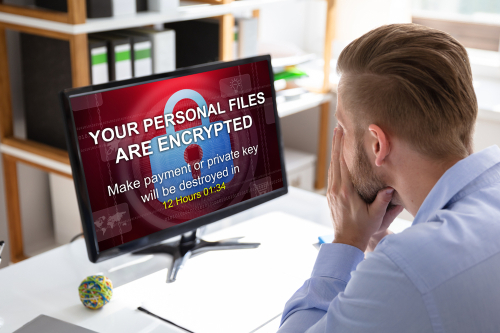
In ransomware attacks, cybercriminals encrypt a victim’s network or data, making it inaccessible until a ransom is paid. Despite organizations’ efforts to reduce the attacks, cybercriminals also are advancing their attack methods. For instance, an organization may have backups they can use to restore their systems, but the criminals also demand ransom not to publish the sensitive company information they have in their possession.
Ransomware is not a new cybersecurity threat. It is traced back to 1989 when the first ransomware was released through floppy disks and required a victim to send money to a post office box in Panama. As technology has now advanced to allow for always-on connectivity, the prevalence of ransomware has grown tremendously. The use of Bitcoin and other cryptocurrencies as payment makes it more complicated as they are difficult to trace. These attacks, such as the WannaCry, CryptoLocker, etc., have resulted in billions in losses through infrastructure and business outages and millions of dollars being paid to the attackers.
Ransomware has grown so much that organized gangs are offering cybercriminals services for hire. This is made more intricate by the availability of ransomware-as-a-service (RaaS) to provide infrastructure to other cybercriminals to escalate their attacks.
Ransomware has become such a global threat that in a joint advisory made up of CISA, FBI, NSA and International Partners, has called for every government, business, and individual to be aware of this threat and take necessary action to avoid becoming victims.
On the other hand, there are efforts to reduce the threat scale by various groups. One such group is the Cyber Threat Intelligence League (CTI-League), made up of cybersecurity experts from different countries. They have helped take down malicious websites, detect vulnerabilities, collect and analyze different phishing messages, and assist law enforcement organizations in creating safer cyberspace.
Protecting Against Ransomware
Before a ransomware attack is fulfilled, there are detectable activities that can aid in mitigating an attack. In any case, the attackers target specific user behavior, unchanged default security configurations and common technology vulnerability. This means that ransomware attacks can be avoided. Some ways to keep safe from ransomware include:
Timely patches – ensure to patch operating systems and other software immediately whenever a patch is released. Patching also should apply to cloud environments, including virtual machines, serverless applications, and third-party libraries.
Keep backups – it is impossible to fully protect an organization’s network as one user action may expose the network to attacks. Regularly backing up data is crucial. However, ensure that cloud backups are encrypted and can’t be deleted or altered. Also, always keep a backup version that is not accessible through the cloud to ensure business continuity in case of an attack.
User training – users are considered the weakest link in the line of defense against cybersecurity. An attack can start with a seemingly legit email containing a link or an attachment that downloads malware to a device once clicked. Therefore, continuous user training and phishing exercises will help reinforce user responses to suspicious emails.
Secure and monitor RDP – as more people adopt remote working, they rely on the remote desktop protocol to connect to office computers or colleagues. This has made RDP one of the most commonly used methods for attackers to gain access to a network. Therefore, businesses should use Network Level Authentication (NLA) and use unique and complex passwords for users to authenticate themselves before making a remote connection. Other ways include multifactor authentication, setting time limits to disconnect inactive RDP sessions automatically, and limiting login attempts.
Use up-to-date antivirus software – this should be used to regularly scan the systems and scan files downloaded from the internet before they are opened.
Network monitoring – use network monitoring tools and intrusion detection systems to look out for any suspicious activity.
The CISA, FBI, NSA, and International Partners joint advisory discourages paying ransom to cybercriminals and recommends following the CISA ransom response checklist and reporting to cybersecurity authorities such as the FBI, CISA, or the U.S. Secret Service. System administrators should also follow incident response best practices that can aid in handling malicious activity.
Disclaimer
These articles are intended to provide general resources for the tax and accounting needs of small businesses and individuals. Service2Client LLC is the author, but is not engaged in rendering specific legal, accounting, financial or professional advice. Service2Client LLC makes no representation that the recommendations of Service2Client LLC will achieve any result. The NSAD has not reviewed any of the Service2Client LLC content. Readers are encouraged to contact a professional regarding the topics in these articles. The images linked to these articles are protected by copyright and should not be copied for any reason.

 Technology advancement has brought about great digital transformation. Unfortunately, this has come with a global tech talent shortage. IT executives highlight the shortage as a huge barrier to the adoption of emerging technologies, as reported by this Gartner study.